Your Cart is Empty

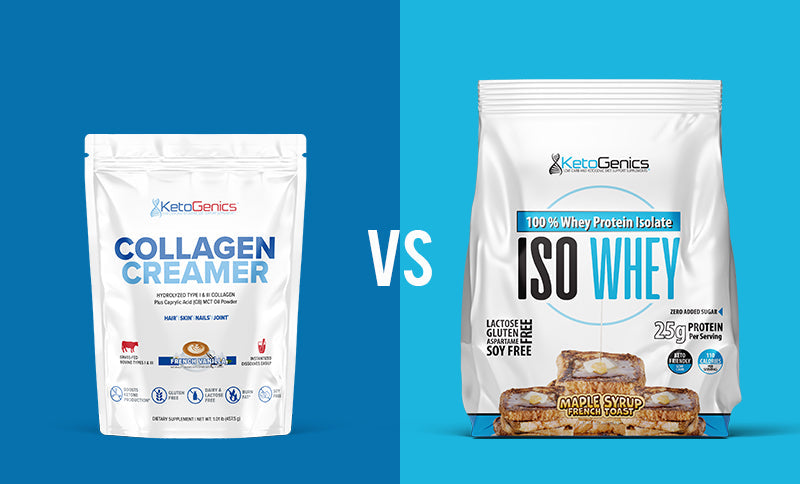

Short version: Collagen and protein powder aren’t interchangeable. Collagen is typically used as a targeted add-on (skin + connective tissue routines), while protein powder is a practical tool for hitting daily protein targets, especially if you train or struggle to get enough protein from food alone.
Quick note: This article is for educational purposes only and is not medical advice. Always follow label directions and talk with your healthcare professional if you’re pregnant, nursing, have a condition, or take medications.
Shop: Collagen & Creamer | Protein Powders | Electrolytes
Most collagen supplements are collagen peptides (also called hydrolyzed collagen). They’re broken down into smaller peptides, which makes them easy to mix into coffee, smoothies, or recipes.
Important distinction: Collagen is generally not considered a “complete” protein source because it’s low in certain essential amino acids. That means collagen is usually best as a targeted add-on,not your primary protein strategy if your main goal is muscle building or meeting higher daily protein needs.
Explore collagen options: Shop Collagen & Creamer
Protein powder (whey, casein, egg, or plant blends) is designed to help you reach daily protein targets efficiently. For many people, it’s the easiest way to add protein without adding a full extra meal.
Unlike collagen, many protein powders are complete proteins,meaning they contain all essential amino acids. Research on resistance training consistently emphasizes that adequate protein intake supports improvements in strength and lean mass when paired with training.
Explore protein options: Shop Protein Powders
Whey protein deserves a quick callout because it’s one of the most researched and widely used protein options, especially for people who lift weights, train regularly, or want a simple way to boost daily protein intake.
Bottom line: If your primary goal is muscle support and hitting daily protein, whey (or another complete protein) is typically the most straightforward choice.
Browse keto-friendly protein options: Shop Protein Powders
Collagen peptides
|
Protein powder (including whey)
|
Keto note: If you’re low carb, hydration and electrolytes can be a big part of consistency, especially around workouts.
Helpful links: Keto Lytes HP | Electrolytes Collection
Collagen is generally not considered a complete protein because it is low in some essential amino acids. Many people use it as a targeted supplement rather than their main protein source.
If your goal is meeting daily protein targets or supporting muscle with training, protein powder is typically the better option. Collagen can be a great add-on, but most people don’t use it as their only protein strategy.
Whey is a complete protein with all nine essential amino acids. It’s also naturally rich in BCAAs, including leucine, which plays a key role in stimulating muscle protein synthesis, making whey a popular choice around workouts and for hitting daily protein targets.
Some human studies and reviews suggest collagen supplementation may support joint comfort in certain populations, though results vary by study design, population, and collagen type.
Protein supplementation alongside resistance training has been shown in meta-analyses to improve strength and lean mass outcomes, especially when people are not already meeting protein targets from food alone.
That’s a common “both” scenario: use protein powder to cover daily protein needs and collagen as a targeted add-on you’ll stick to (like coffee).
Collagen and protein powder do different jobs. If you’re choosing one, pick based on your primary goal: collagen for targeted skin/connective tissue routines, protein powder (often whey) for daily protein coverage and training support. If your routine and budget allow, many people like using both.
Ready to stock up? Shop Collagen & Creamer | Shop Protein Powders
*These statements have not been evaluated by the FDA. Not intended to diagnose, treat, cure, or prevent any disease.
Comments will be approved before showing up.